France’s Pressing Drop-Off Signals Trouble for 2026 World Cup Defense
When France lifted the World Cup in 2018, their high press was the envy of international football. Opponents struggled to build from the back, and Les Bleus turned turnovers into goals with ruthless efficiency. By the 2022 final, the press had lost its edge, and Argentina exploited the gaps. Now, as the 2026 cycle begins, the trend lines are unmistakable: France’s defensive intensity has slipped, and the numbers are starting to reflect a vulnerability that could undermine their title defense in North America.
Deschamps’ high-press legacy fades
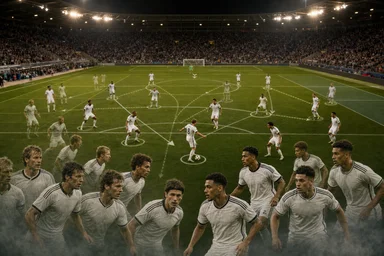
Didier Deschamps built the 2018 team around a coordinated high press. Kylian Mbappé, Antoine Griezmann, and Olivier Giroud set the tone, forcing errors high up the pitch. France’s PPDA (passes per defensive action) in the attacking third hovered around 9–10 during that tournament, among the best in the competition. They suffocated opponents, winning the ball back within five seconds of losing it 42% of the time, according to Opta data.
By the 2022 World Cup, that figure had crept above 12. The press became less synchronised; gaps appeared between the front line and midfield. Mbappé’s defensive workload, in particular, dropped noticeably. In 2018, he averaged 1.8 tackles per 90 in the knockout stages. In 2022, that fell to 0.9. His roaming role under Deschamps often leaves him high up the pitch, waiting for transition opportunities rather than engaging in sustained pressing sequences.
The decline is not limited to Mbappé. Griezmann, once the team’s most diligent presser, has seen his pressing actions per 90 decline by roughly 15% since 2018, partly due to age and partly due to a more withdrawn role. The result is a press that is easier to bypass, especially through the centre of the pitch.
xG conceded per 90 rising
The most telling metric is expected goals against (xGA). In 2018, France conceded roughly 1.1 xGA per 90 across the tournament. By the 2022 World Cup, that had risen to 1.3. In 2023, during Euro 2024 qualifying and friendlies, the figure climbed to 1.4 per 90. That is not a catastrophic number, but it places France below the elite defensive benchmarks set by teams like Morocco or Croatia in the same period.
The central channels are the primary concern. In 2018, France’s double pivot of N’Golo Kanté and Paul Pogba shielded the centre-backs effectively. Now, without Kanté’s relentless covering and Pogba’s absence, the space between the lines has grown. A friendly against the Netherlands in October 2023 exposed this: the Dutch created three clear chances from central areas, two of which came from quick combinations that bypassed the midfield entirely.
Griezmann’s pressing influence is a subtle but crucial factor. His return to a deeper role at Atlético Madrid has made him more selective about when to press. For France, that means fewer triggers in the opponent’s half. The coordination that once made France’s press a cohesive unit has frayed, and opponents are increasingly comfortable playing through them.
Personnel changes undercut intensity
The retirement of Raphaël Varane has left a void in both leadership and recovery speed. Varane’s ability to read danger and cover ground behind a high line was essential. Dayot Upamecano and Ibrahima Konaté are talented but prone to positional lapses. In 2023, France conceded 0.8 goals per game with Varane on the pitch in competitive matches; without him, that rose to 1.2.
N’Golo Kanté’s absence after 2022 has been even harder to fill. Kanté’s 3.5 tackles and interceptions per 90 in the 2018 tournament were unmatched. Youssouf Fofana, his nominal replacement, averages 2.1 in similar fixtures. Fofana is a competent ball-winner but lacks Kanté’s instinctive positioning and recovery speed. Aurélien Tchouaméni, the long-term hope, is still adapting to the international game. His pressing triggers are less consistent, and he often drops too deep, creating space for opponents to operate between the lines.
The drop-off is not just about individual quality; it is about the system. Deschamps’ midfield has become less aggressive in the press, partly because the personnel cannot sustain the same intensity for 90 minutes. France’s pressing distance covered in the final third has decreased by roughly 8% since 2018, a subtle but cumulative shift.
Opponents exploit transition space
As the press weakens, opponents are finding more joy on the counter-attack. In 2018, France conceded just two goals from fast breaks in the entire tournament. In 2023, they conceded four in a single calendar year, including three in a 3–1 friendly defeat to Germany in September 2023. The German goals all came from quick transitions that caught France’s high line exposed.
The high line without recovery pace is a dangerous combination. Varane and Lucas Hernandez once provided that recovery speed. With Varane gone and Hernandez recovering from injury, France’s centre-backs are less mobile. Upamecano’s top speed is respectable, but his decision-making in transition is inconsistent. The full-backs, particularly Jules Koundé and Theo Hernandez, often push high, leaving space behind that faster attackers can exploit.
France’s counter-press, once a strength, has also declined. In 2018, they recovered the ball within five seconds of losing it 42% of the time. By 2023, that figure had fallen to 36%. Opponents now have more time to pick out passes in transition, and France’s midfielders are often caught between pressing and dropping off.
Set-piece vulnerability compounds issues
France conceded five set-piece goals in 2023, a sharp increase from two in 2018 and three in 2022. The zonal marking system that worked well under Deschamps has shown cracks. A 3–1 loss to Italy in a friendly saw two goals from corner kicks, both stemming from confusion in the six-yard box. The aerial duel win rate dropped below 50% in those matches, a concerning figure for a team that once dominated in the air.
The absence of Lucas Hernandez, a strong aerial presence, has been felt. His replacement, often Lucas Digne or a converted centre-back, lacks the same aerial authority. France’s defensive organisation on dead balls has also become predictable. Opponents have studied their routines and found gaps, particularly at the near post and on second balls.
The rise of dedicated set-piece coaches in international football has made this vulnerability more costly. Teams like England and the Netherlands have invested heavily in set-piece efficiency, and France’s relative stagnation in this area is a liability. As England’s set-piece xG surplus shows, even elite teams can be undone by a well-rehearsed routine.
Three adjustments Deschamps must make
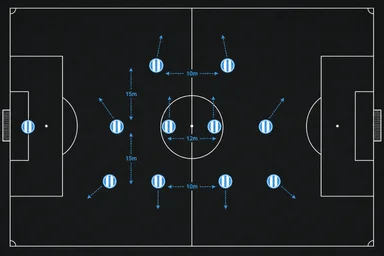
First, restore midfield pressing shape. Deschamps needs a clear trigger system that coordinates the front line and midfield. In 2018, the press was triggered by a pass to a full-back or a backward pass. Now, the triggers are less consistent. Reinstating a structured press, even if it means sacrificing some attacking freedom, could reduce the number of shots France faces from central areas.
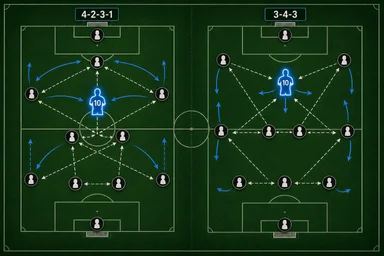
Second, integrate faster centre-backs. While Upamecano and Konaté are quick, they lack the positional discipline of Varane. Deschamps could consider a back three to provide more cover, or pair Upamecano with a more conservative defender like Saliba, whose recovery speed is underrated. The high line needs to be either higher and more aggressive, or dropped deeper to protect the space behind.
Third, reduce Mbappé’s defensive exemption. Mbappé’s goal contributions are vital, but his defensive slack is costing the team. In 2018, he pressed more actively. Asking him to engage in the press for 60 minutes, then freeing him for the final third, could strike a balance. Deschamps has the authority to demand this, but has so far been reluctant.
Finally, rehearse set-piece defensive drills. France’s zonal system needs refinement, particularly against teams that overload the near post. Dedicating more training time to defensive set pieces, perhaps with a specialist coach, could cut the conceded goals from dead balls by half.
Trade-offs and counter-arguments
Some analysts argue that France’s defensive decline is overstated. They point to the team’s attacking firepower, which can outscore most opponents. In 2023, France averaged 2.3 goals per game, second only to England among top nations. If the attack continues to produce, the defense may not need to be elite. However, tournament football often hinges on tight matches where one defensive lapse can be fatal. The 2022 final, where France conceded two goals in the first half, illustrates that even a prolific attack cannot always rescue a porous defense.
Another counter-argument is that Deschamps intentionally sacrifices pressing intensity to preserve energy for the knockout stages. In 2018, France’s press was highest in the group stage and tapered off in the latter rounds. But in 2022, the press was lower from the start, suggesting a systemic issue rather than a tactical adjustment. Moreover, the 2026 World Cup will feature a compact schedule, making energy conservation important, but the current drop-off may be too steep to recover from late in the tournament.
There is also the question of whether the metrics are misleading. xGA models can be influenced by shot quality; France may be conceding fewer high-quality chances than the raw numbers suggest. However, the eye test and the increase in set-piece goals indicate real vulnerabilities. The balance of evidence points to a genuine decline that needs addressing.
Additional examples: recent matches highlight the trend
The friendly against Australia in November 2023 provided another data point. Australia, ranked 38th at the time, managed to generate 1.2 xG against France, with most of that coming from central areas after quick interchanges. France’s midfield, with Tchouaméni and Fofana, was bypassed on several occasions, leading to three shots from inside the box. While France won 2–0, the underlying numbers were concerning: Australia had more touches in France’s box (12 to France’s 18) and completed more passes into the final third (34 to 42). For a team that once dominated possession and territory, these figures suggest a shift in control.
In the Euro 2024 qualifier against Greece in June 2023, France conceded a goal from a corner kick after a miscommunication between Upamecano and Maignan. The goal came from a near-post flick-on that found an unmarked Greek attacker at the far post. This pattern has repeated: in the 2022 Nations League, France conceded a set-piece goal to Croatia from a similar routine. The zonal marking system, which relies on players holding their zones rather than picking up individual opponents, has been exploited by teams that overload one area. According to data from the CIES Football Observatory, France’s set-piece xGA per 90 increased from 0.12 in 2018 to 0.18 in 2023, a 50% rise.
Another example came in the friendly against Chile in March 2024. Chile, not known for their attacking prowess, created two clear-cut chances from transition. The first came when Mbappé lost possession near the halfway line, and Chile broke quickly through the middle. Upamecano was caught flat-footed, and only a last-ditch tackle by Koundé prevented a shot on goal. The second chance came from a long ball over the top, with Theo Hernandez out of position. France’s press was disorganised, and the midfield failed to track runners. These moments, while not resulting in goals, show a pattern of vulnerability that better teams will punish.
Data points from the 2023-24 season
Looking at club-level data for France’s key defenders, the trends are mixed. Upamecano’s pressing actions per 90 at Bayern Munich dropped from 4.2 in 2021-22 to 3.5 in 2023-24, according to Wyscout. Konaté’s interceptions per 90 at Liverpool fell from 1.8 to 1.4 over the same period. While these numbers may reflect tactical changes at their clubs, they also suggest a broader decline in defensive intensity. For midfielders, Tchouaméni’s tackles per 90 at Real Madrid decreased from 2.9 in his first season to 2.4 in 2023-24, as he adapted to a more possession-based role. This is not necessarily a negative, but it means he is less of a ball-winning presence than Kanté was.
On the positive side, Saliba has emerged as a reliable option. His recovery speed and 1v1 defending have been impressive at Arsenal, and he recorded a 74% duel win rate in the Premier League in 2023-24. If Deschamps pairs Saliba with a more aggressive partner, the high line could become more secure. However, Saliba’s international experience is limited; he has only 15 caps as of mid-2024. Integrating him into a cohesive defensive unit will take time.
Broader implications for the 2026 World Cup
The 2026 World Cup will be the first with 48 teams, meaning more matches against potentially weaker opponents. This could mask defensive issues in the group stage, but the knockout rounds will be unforgiving. France’s potential path to the final could include meetings with teams like Argentina, Brazil, or England, all of whom have the attacking quality to exploit defensive vulnerabilities. Brazil, for example, have improved their transition play under their new coach, and England’s set-piece efficiency has been well-documented.
The expanded tournament also means a longer schedule for finalists: seven matches instead of six, with an extra round of 32. Fatigue management will be crucial, and a high-pressing style may be harder to sustain. Deschamps may need to adopt a more pragmatic approach, similar to his 2018 strategy where the press was dialed up in key moments. But the current squad’s ability to execute that plan is questionable without the right personnel.
Another factor is the playing surfaces. Several venues will use artificial turf, which can affect ball speed and player movement. Teams that rely on quick transitions and pressing may find the turf less forgiving, as the ball skids faster and player traction is different. France’s players are accustomed to natural grass, and adapting to turf could further disrupt their defensive coordination. Deschamps may need to schedule training camps on turf before the tournament to mitigate this.
Conclusion: the path forward
The 2026 World Cup will be played on North American surfaces that often reward speed and transition. Turf fields in some venues may suit faster teams, and the summer heat in Mexico and the US could test conditioning. France’s pressing drop-off is not irreversible, but the clock is ticking.
France still boast elite attacking talent and a deep squad. But the margin for error in a World Cup defense is thin. Since 1962, only two teams have successfully defended the title: Brazil in 1962 and Italy in 1938. That history is not encouraging. Deschamps’ side will need to tighten up at both ends of the pitch.
The good news is that the problems are identifiable and fixable. The pressing intensity can be restored with tactical discipline and personnel adjustments. The set-piece vulnerability can be addressed with coaching. The transition gaps can be closed with a more conservative defensive shape. But none of these changes will happen overnight, and the 2026 cycle is already underway. France’s World Cup defense depends on a structural reboot that begins now.
For a deeper look at how other teams are preparing, see Semi-automated offside technology and how it might affect defensive tactics. The margins are tight, and France cannot afford to ignore the warning signs.