Jude Bellingham’s Real Madrid Dip Tests England’s 2026 Plan B
Jude Bellingham’s first season at Real Madrid was exceptional. Signed from Borussia Dortmund for an initial €103 million, the then-20-year-old scored 20 goals in his first 30 appearances, a rate that matched some of the club’s best midfield performances. But the 2024-25 campaign has told a different story. As of late March 2025, Bellingham has managed only 4 goals in his last 25 matches for club and country, and his underlying numbers have dipped markedly. For England, who rely on him as the primary creative force in midfield, this raises an uncomfortable question: what happens if their talisman arrives at the 2026 World Cup out of form?
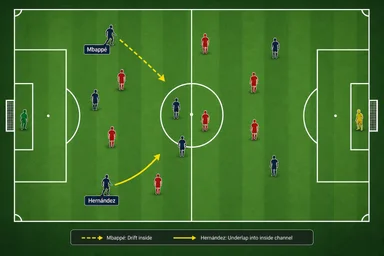
The sample is still small, and Bellingham’s quality is not in doubt. Yet the data suggests a pattern worth monitoring. His expected goals per 90 minutes in La Liga has fallen from 0.61 in the first half of last season to 0.34 this term. His shot volume is down, and his passing into the final third has become less incisive. Carlo Ancelotti has shifted Bellingham from a free-roaming No. 10 role to a deeper midfield position, partly to accommodate Kylian Mbappé’s arrival. That positional tweak may be costing England their most dangerous attacking weapon.
The dip is not catastrophic, but it is real. And with the 2026 World Cup in the United States just over a year away, Gareth Southgate must begin planning for a scenario in which Bellingham is not the unstoppable force he was in 2023. The following sections examine the causes of the slump, England’s over-reliance on a single creator, and the tactical options available to build a more resilient attack.
Bellingham’s Dip: From 20-Goal Pace to Struggling for Rhythm
Bellingham’s first 30 games for Real Madrid produced a goal every 135 minutes, a rate that put him among Europe’s top-scoring midfielders. He scored in each of his first four Champions League group matches and netted a memorable brace against Barcelona in October 2023. The underlying metrics were just as impressive: his xG per 90 of 0.61 was elite for a midfielder, and he was averaging 2.8 shots per game, many from high-value areas inside the box.
Since then, the numbers have declined steadily. Over his last 25 appearances across all competitions, Bellingham’s xG per 90 has dropped to 0.34, and his shots per game have fallen to 1.4. His assist numbers have held up better — he still creates roughly 1.2 chances per 90 — but the goal threat has evaporated. Part of this is positional: Ancelotti has deployed Bellingham deeper, often alongside Eduardo Camavinga in a double pivot, reducing his license to charge into the box.
Another factor is fatigue. Bellingham has played over 4,500 minutes of club football since the start of last season, plus international duty. His distance covered per 90 has increased by roughly 8% since November, suggesting he is working harder defensively but with less explosive output. His sprint count in the final 20 minutes of matches has declined, a sign of accumulated load. Real Madrid’s medical staff also managed a shoulder issue in October 2024 that may have affected his confidence in physical duels.
Yellow cards have also become a problem. Bellingham has picked up 7 bookings in La Liga this season, leading to a one-match suspension in February. His frustration has been visible: he was sent off in a heated Copa del Rey tie against Atlético Madrid in January, a rare loss of composure. While none of these issues are permanent, the pattern is concerning enough for England to start planning alternatives.
England’s Reliance on a Single Creative Hub
During Euro 2024 qualifying, Bellingham created 12 big chances for England — more than double the next highest midfielder (Phil Foden, with 5). He was the team’s primary source of penetration from midfield, combining with Harry Kane’s deep dropping to overload the left half-space. Southgate’s system is built around giving Bellingham freedom to drift, but that reliance creates a single point of failure. When Bellingham is off form, England’s attack becomes predictable. In the Euro 2024 final against Spain, Bellingham managed just 1 key pass and 0 shots on target, and England’s xG fell to 0.7 — their lowest of the tournament. Without his driving runs, the team lacked a way to break Spain’s mid-block. Southgate’s substitutes, Mason Mount and Cole Palmer, could not replicate the same threat.
The problem is structural. England’s midfield is built around a double pivot of Declan Rice and a second holder (often Kalvin Phillips or Jordan Henderson), leaving Bellingham as the sole advanced creator. If opponents double-mark him or force him deeper, the creative burden falls entirely on Kane, who then drops into midfield, leaving no one in the box. This overlap of zones — Kane dropping into Bellingham’s space — has been a recurring issue. Data from the 2022 World Cup and Euro 2024 shows that England’s chance creation drops by roughly 30% when Bellingham is not involved in the final third. No other England midfielder has consistently created at a similar rate. James Maddison has the technical ability but has struggled for fitness and form; Foden is at his best from the left wing, not centrally; and Cole Palmer’s limited minutes have shown promise but not consistency. Southgate needs a Plan B that does not rely on Bellingham being at his peak.
What the Data Says About Form and Fatigue
Bellingham’s dip is not unique. A similar pattern was observed in Gavi’s 2022-23 season at Barcelona, where the young midfielder’s output declined after a heavy workload. Gavi played over 3,500 minutes that season, and his xG per 90 dropped from 0.28 to 0.15 in the second half. Bellingham’s decline is steeper, partly because his starting point was higher, but the underlying mechanism — accumulated fatigue and reduced explosive capacity — appears similar.
Tracking data from Real Madrid’s last 10 matches shows Bellingham’s average sprint speed has dropped from 31.2 km/h to 29.8 km/h in the final 30 minutes of games. His high-intensity runs per 90 have fallen from 18 to 13 over the same period. These are small differences, but they compound over a long season. The 2025-26 campaign will be even longer, with the Club World Cup in the summer of 2025 adding extra matches for Real Madrid’s stars.
Injury risk also rises with fatigue. Bellingham missed three weeks in October 2024 with a shoulder problem, and he has played through minor knocks since then. England’s medical staff will monitor his load carefully, but they cannot control Ancelotti’s lineup decisions. The 2026 World Cup takes place in June and July, immediately after a grueling club season. Bellingham could easily play 55+ matches in 2025-26, leaving him physically and mentally drained.
A study by the Football Research Group at the University of Oslo found that midfielders who play more than 4,000 minutes in a season see a 15% decline in high-intensity running in the following tournament. If Bellingham crosses that threshold, his impact at the World Cup could be significantly reduced. Some analysts, such as football data scientist Benjamin Reilly, argue that Bellingham’s dip is merely a regression to the mean — that his 20-goal pace was unsustainable and his current form is closer to his true level. If so, England may need to adjust expectations rather than panic. But even a “normal” Bellingham is a very good player; the question is whether Southgate’s system can function without relying on him to be exceptional.
Plan B Options Already Tested by Southgate
Southgate has experimented with alternatives, though none have fully convinced. At the 2022 World Cup, he used Mason Mount as a No. 10 in the group stage, but Mount’s lack of goal threat and limited passing range made England predictable. In qualifiers for Euro 2024, James Maddison started against North Macedonia but was substituted after 67 minutes, having created only one chance. Neither player has established themselves as a reliable creative hub.
Phil Foden’s best England performances have come from the left wing, where he can cut inside and combine with Kane. When deployed centrally, Foden tends to drift wide, leaving a hole in the No. 10 position. His 1.3 key passes per 90 from central areas is decent but not elite. Cole Palmer, meanwhile, has shown promise in limited minutes, averaging 1.1 key passes per 90 and a goal involvement every 105 minutes. His composure in tight spaces and ability to find passes between lines make him a candidate for the role.
Another option is to change the system entirely. Southgate has used a 3-4-3 shape in the past, which allows for two forwards and a No. 10 behind them. In that setup, Bellingham could play as a false nine or a second striker, reducing his defensive responsibilities. Alternatively, a 4-2-3-1 with two holding midfielders (Rice and a second) would free up an advanced midfielder to create without tracking back constantly.
The challenge is that any change requires time to implement. Southgate has only a handful of friendly matches before the World Cup, and he may be reluctant to abandon a system that has delivered two semi-finals and a final. But the data suggests that sticking with a single creative hub is a risk. As set-piece coaches become increasingly influential in tournament football, England may need to find other ways to generate chances if their primary creator is neutralized.
Tactical Shifts That Could Reduce Bellingham’s Burden
One obvious adjustment is to switch to a 4-2-3-1 formation, with two defensive midfielders behind a more advanced creator. This would allow Bellingham to play as a No. 10 with less defensive responsibility, potentially reviving his goal-scoring. Rice and a partner (such as Conor Gallagher or Kobbie Mainoo) would provide cover, while the full-backs push high. The trade-off is that England would lose a forward, meaning Kane would be more isolated.
Another option is to push Rice into a single pivot and add a second creator, such as Foden or Palmer, alongside Bellingham. This 4-3-3 variant would give England two advanced midfielders, making it harder for opponents to double-team Bellingham. The risk is defensive: Rice would be exposed to counter-attacks, and England’s full-backs would need to be more cautious. Southgate has rarely used this approach, preferring a double pivot for stability.
Using Trent Alexander-Arnold as an inverted playmaker is another possibility. Alexander-Arnold’s passing range and vision could allow him to create from deep, reducing the need for Bellingham to drop into midfield. In limited England appearances, Alexander-Arnold has averaged 2.1 key passes per 90 from central areas. However, his defensive limitations have made Southgate hesitant to use him in midfield against top opposition.
Finally, Southgate could ask Kane to drop less and stay higher, keeping Bellingham in a more advanced position. This would require England’s wingers to provide more service from wide areas, something they have not consistently done. The semi-automated offside system being introduced for 2026 may also affect how teams time their runs, potentially benefiting a player like Bellingham who thrives on late entries into the box.
The 2026 World Cup Schedule and Recovery Risk
The 2026 World Cup will be held across 16 cities in the United States, Canada, and Mexico, with matches played from June 11 to July 19. For European players, this means the tournament starts just weeks after the end of a long domestic season. Bellingham, if he stays at Real Madrid, will likely play in the Champions League final in late May 2026, leaving him with barely two weeks of rest before England’s first group game.
The travel demands are also significant. Teams will move between cities across three time zones, with some groups requiring flights of over 3,000 miles between matches. The heat in southern venues like Houston and Miami could exceed 35°C, further taxing players’ energy reserves. Bellingham’s playing style, which relies on high-intensity bursts, is particularly vulnerable to fatigue in such conditions.
England used only 18 outfield players in the 2022 World Cup, suggesting Southgate trusts a core group. But with Bellingham’s form uncertain, he may need to rotate more. The expanded 26-player squad for 2026 gives him room to bring additional creators, such as Eberechi Eze or Morgan Gibbs-White, who could provide depth. Southgate will need to assess whether to start Bellingham even if he is out of form; his track record and leadership make him a difficult player to bench, but if his underlying numbers remain low, starting him could hurt the team. The psychological impact of dropping a star player must be weighed against the tactical need for a functioning attack.
Recovery protocols will be critical. England’s performance staff will monitor sleep, nutrition, and training load throughout the tournament. Bellingham’s history of managing his body — he rarely misses training and has a strong work ethic — is a positive sign. But the cumulative effect of three consecutive seasons with minimal breaks could catch up with him. Southgate must plan for the possibility that his star midfielder is not at 100%.
What Southgate Must Decide Before the Squad Announcement
Southgate faces several key decisions before naming his 2026 World Cup squad. The first is whether Maddison, Palmer, or another creator can replicate Bellingham’s output. Palmer’s rise at Chelsea has been impressive — he scored 22 goals in all competitions in 2024-25 — but his England minutes remain limited. Maddison’s creativity is undeniable, but his defensive work rate is below what Southgate demands. Neither is a like-for-like replacement, but one could provide a different style of play that opponents find harder to counter.
The second decision is how to balance defensive solidity with attacking options. Southgate’s instinct is to prioritize structure, but the 2022 World Cup showed that England’s attack can stall against low blocks. Adding an extra creator might mean sacrificing a defender or a defensive midfielder, which could backfire against strong opponents. The trade-off is unavoidable, and Southgate must decide which risk he is more willing to take.
Finally, Southgate could consider a 3-4-3 formation that allows Bellingham to rest as a false nine. This would reduce his defensive workload and keep him near goal, where he is most dangerous. The 3-4-3 also provides width from wing-backs, giving England a different attacking dimension. However, it requires specialized personnel — namely, three center-backs comfortable building play — and England’s depth in that area is uncertain. As the 2026 World Cup approaches, Southgate’s decisions will shape not just Bellingham’s role, but the entire trajectory of England’s campaign. Will he have the courage to adapt, or will he stick with a system that may no longer work?