Brazil’s Alisson-Ederson Pair Raises World Cup Goalkeeping Bar to 2026
As the 2026 World Cup approaches, the most intriguing selection debate for Brazil's national team involves the two men guarding the net. Alisson Becker and Ederson Santana de Moraes are not merely world-class goalkeepers; they represent a tactical fork in the road for manager Carlo Ancelotti. No other nation can boast such depth at the position, and the choice between them could define Brazil's campaign in North America.
Two World-Class Goalkeepers, One Unprecedented Scenario
Brazil finds itself in a situation rare in world football: both Alisson and Ederson are at their peak, starting for Premier League giants Liverpool and Manchester City respectively. As of late 2024, Alisson is widely regarded as the best pure shot-stopper in the world, while Ederson is the premier ball-playing goalkeeper, a playmaker from the back. This depth was once unthinkable for Brazil, a nation that historically relied on a single No. 1—think Taffarel in 1994, Dida in 2002, or Julio Cesar in 2014.
During the 2022 World Cup, Tite faced a similar but less acute dilemma. He started Alisson in all five matches, leaving Ederson on the bench. The decision was conservative, prioritising Alisson's shot-stopping reliability over Ederson's distribution. In the quarterfinal exit against Croatia, Ederson's ability to break a high press might have been useful, but Tite never called upon him. That decision drew criticism, especially as Brazil struggled to build from the back under pressure. Now, with Ancelotti at the helm, the dynamic has shifted. The Italian manager's system at Real Madrid demanded a goalkeeper comfortable with the ball at his feet—Thibaut Courtois, though not a pure distributor, was asked to play short passes under pressure. Ancelotti's Brazil is expected to adopt a similar approach, which could tilt the balance toward Ederson.
Yet the 2026 selection battle is not a foregone conclusion. Alisson has evolved his game, becoming more proactive in sweeping and distribution. His passing accuracy in the 2023-24 Premier League was 82%, just shy of Ederson's 84%. The margin is slim, and the decision may come down to specific matchups. In group-stage games against weaker opponents, Ederson's ability to initiate attacks quickly could be invaluable. In knockout rounds against elite sides, Alisson's shot-stopping might be the safer bet.
The unprecedented depth also raises questions about squad morale. Both keepers are accustomed to being starters at club level. Ederson has started for Manchester City for seven seasons, while Alisson has been Liverpool's undisputed No. 1 since 2018. Ancelotti will need to manage egos and keep both engaged, possibly by rotating them in friendlies and early tournament matches. The 2026 World Cup squad will likely include a third goalkeeper—perhaps Bento from Athletico Paranaense or Mycael—but the spotlight will remain on the duo.
How Alisson and Ederson Redefined Modern Goalkeeping
To understand the selection dilemma, one must appreciate how each keeper has reshaped the position. Alisson, who rose to prominence at Roma under Luciano Spalletti, was an early adopter of the sweeper-keeper role. His ability to read through balls and rush off his line to snuff out chances became a hallmark. In the 2023-24 Premier League, Alisson averaged 1.2 sweeper actions per 90 minutes, ranking among the top five keepers. His shot-stopping is elite: a post-shot expected goals (PSxG) differential of +7.3, meaning he prevented roughly 7.3 goals more than the average keeper would have conceded based on shot quality. That figure placed him third in the league, behind only Thomas Kaminski and Bernd Leno.
Ederson, on the other hand, is a revolutionary figure in goalkeeper distribution. Signed by Pep Guardiola in 2017, he transformed how Manchester City build from the back. His long-pass accuracy in 2023-24 was 82%, and he completed 28 key passes from goal—more than any other Premier League keeper. Ederson's ability to hit a 60-yard pass to a winger in stride is a weapon that bypasses entire midfield presses. However, his shot-stopping is less consistent. His PSxG differential of +2.1 was solid but not elite, and his save percentage of 71% was below Alisson's 78%. Some critics argue that Ederson's positioning on long-range shots can be suspect, though his reflexes are sharp in one-on-one situations.
A concrete example of Ederson's distribution changing a game occurred in the 2023-24 Premier League match against Tottenham. With Manchester City trailing 1-0 in the 85th minute, Ederson collected a back pass under pressure, spotted Erling Haaland making a run, and launched a 65-yard pass directly to Haaland's feet. Haaland then assisted the equaliser, and City went on to win 2-1. That pass was a game-changer, highlighting how Ederson can unlock defences from deep. Conversely, Alisson's shot-stopping won Liverpool the 2019 Champions League final. In the 87th minute, with Liverpool leading 2-0, Alisson made a reflex save from a close-range header by Tottenham's Lucas Moura, preserving the clean sheet and securing the trophy. That save exemplified his ability to deliver in decisive moments.
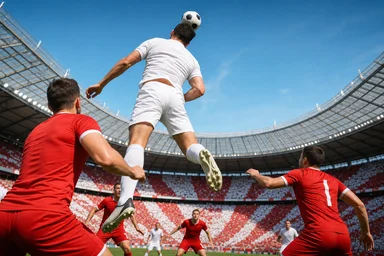
Both keepers have surpassed 80% pass accuracy in each of the last three seasons, a testament to their technical skill. Yet the numbers also reveal trade-offs. Alisson's claim rate on crosses is 9.1%, higher than Ederson's 6.7%, but both are below the league average. Set-piece vulnerability is a shared weakness: neither dominates the aerial battle with authority, relying instead on defenders to clear. In a World Cup knockout game, a single corner could expose this gap.
Their styles also influence defensive organisation. Ederson's willingness to play risky passes can lead to turnovers in dangerous areas. In the 2023-24 Champions League, Ederson made three errors leading to goals, while Alisson made one. Conversely, Alisson's reluctance to play long balls quickly can slow Brazil's transition, allowing opponents to reset. The data suggests both are elite, but in different phases of play. Ancelotti's system will need to accommodate whichever keeper starts, or perhaps tailor tactics to each opponent.
Tite’s Tactical Conundrum: Stability vs Initiative
The 2022 World Cup quarterfinal exit to Croatia on penalties remains a painful memory. Tite's decision to start Alisson in every match was consistent with his conservative approach. He valued security over initiative, believing Alisson's shot-stopping gave Brazil a safety net. In the group stage, Brazil conceded only one goal, but that was against Switzerland after Alisson had little to do. In the knockout rounds, South Korea scored once, and Croatia's equaliser came from a deflected shot that Alisson could do little about. The penalty shootout was a different story: Alisson saved only one of four penalties he faced, though shootouts are notoriously random.
Critics argued that Ederson's distribution could have helped Brazil break Croatia's compact block. In the second half, Brazil struggled to maintain possession under pressure, and their build-up play became disjointed. Ederson's ability to switch play or find a midfielder in space might have created more chances. Tite, however, was unwilling to risk a mistake from the back. His 2022 World Cup squad included three goalkeepers: Alisson, Ederson, and Weverton. Ederson did not play a single minute.
The decision was emblematic of Tite's overall caution. He preferred a rigid defensive structure, and Alisson fit that mold. Yet the narrow defeat highlighted the limits of a purely reactive approach. Croatia's equaliser came from a set piece—a corner that was cleared only to Bruno Petkovic, whose shot deflected past Alisson. Could Ederson have organised the wall better? Possibly, but the root cause was a failure to manage the game from the front. Brazil's inability to keep the ball high up the pitch invited pressure.
Since then, the conversation has shifted. Brazilian media and fans increasingly call for Ederson to be given a chance. The 2026 qualifying campaign has seen both keepers rotated in friendlies, but Ancelotti has yet to name a clear No. 1. The new coach's preference for building from the back suggests Ederson may have the edge, but Alisson's reputation in big moments cannot be ignored. As of early 2025, the battle is unresolved.
Carlo Ancelotti’s Brazil: A New Tactical Blueprint
Carlo Ancelotti's appointment as Brazil manager in 2024 brought a shift in philosophy. At Real Madrid, Ancelotti showed flexibility but favoured a system that relied on quick transitions and technical security. His goalkeeper, Thibaut Courtois, was a hybrid—comfortable with short passes but also adept at claiming crosses. Ancelotti's Brazil is expected to adopt a similar hybrid model, but the personnel available are more extreme in their specialisations.
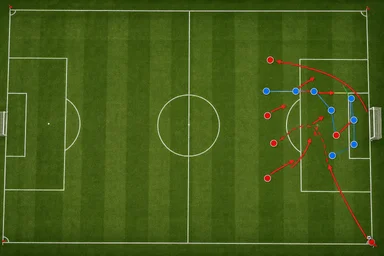
Ederson fits the high-press breaking approach that Ancelotti used at Real Madrid against top sides. In the 2023-24 Champions League, Real Madrid's build-up often involved Courtois playing short passes to centre-backs, drawing the press, then a quick ball to midfield. Ederson can execute that pattern with greater precision. His left foot is a wand, capable of finding Vinicius Jr. or Raphinha on the flank. For Brazil, whose wide attackers thrive on space, Ederson's distribution could be a decisive weapon in the group stage.
Alisson, however, offers reliability in knockout stages. In the 2022-23 Premier League, he made several vital saves in tight matches, including a memorable double save against Newcastle. His calmness under pressure is contagious. Ancelotti may adopt a dual approach: start Ederson in group games and round-of-16 matches, then switch to Alisson for quarterfinals onward. That strategy, however, risks disrupting rhythm and squad harmony. Goalkeepers need continuity, and a mid-tournament change could backfire.
In 2026 World Cup qualifying, Brazil has rotated both keepers. In a friendly against England in March 2024, Ederson started and impressed with his distribution. In a qualifier against Argentina, Alisson started and kept a clean sheet. Ancelotti has not revealed his preference, but the pattern suggests he values Ederson's ability to control games from the back. The decision will likely be made closer to the tournament, based on form and opponent.
The Data Behind the Decision: Metrics That Matter
Statistics offer a clearer picture of the trade-offs. Post-shot expected goals (PSxG) differential measures how many goals a goalkeeper prevents relative to the quality of shots faced. In the 2023-24 Premier League, Alisson's PSxG differential of +7.3 was elite, ranking third. Ederson's +2.1 was above average but not exceptional. This suggests Alisson is the better shot-stopper, particularly against high-quality chances.
Distribution metrics tell a different story. Ederson's long-pass accuracy of 82% and his 28 key passes from goal demonstrate his playmaking ability. Alisson's long-pass accuracy was 74%, and he created 12 key passes. Ederson also completed more passes into the final third per 90 minutes (8.1 vs. 5.4). For a team that wants to transition quickly, Ederson is the clear choice.
Sweeper actions—defined as defensive actions outside the penalty area—favour Alisson slightly: 1.2 per 90 compared to Ederson's 0.9. Both are comfortable sweeping, but Alisson's reading of through balls is marginally better. On crosses, neither excels. Alisson's cross-claim success rate of 9.1% is low by historical standards; Ederson's 6.7% is even lower. Brazil's defenders will need to be dominant in the air regardless of who starts.
Penalty shootout records are often cited, but sample sizes are small. Alisson has faced 17 penalties in his Premier League career, saving 4 (23.5% save rate). Ederson has faced 19, saving 3 (15.8%). Neither is a penalty specialist, though Alisson's slightly better record may be a factor in knockout matches. However, shootouts are unpredictable, and the sample is too small for firm conclusions.
How Brazil Can Weaponize Both Keepers for 2026
One solution is to use the group stage to maximise Ederson's strengths. Brazil's group opponents in 2026 are not yet determined, but if they face a side that presses high, Ederson's ability to break the press could be vital. In matches where Brazil dominates possession, Ederson's distribution can accelerate attacks. Alisson, meanwhile, could be saved for knockout rounds where every shot matters more.
Another approach is to tailor the choice to the opponent. Against a team like France or Argentina, which create high-quality chances, Alisson's shot-stopping may be essential. Against a team like Morocco or Senegal, which rely on counter-attacks, Ederson's sweeping and distribution could neutralise their transition. Ancelotti could also use Ederson to chase a goal late in a game, substituting him for an outfield player if needed, though that is rare.
The set-piece vulnerability is a concern for both. In the 2022 World Cup, Brazil conceded from a corner against Croatia. Neither keeper dominates the six-yard box, so Ancelotti may need to drill specific routines to protect them. Brazil's centre-backs, likely Marquinhos and Gabriel Magalhaes, are strong in the air, but they cannot cover every cross. The goalkeeper's inability to claim crosses could be exploited by teams like England or Germany.
Ultimately, Brazil may not need to choose. In a 26-man squad, both will travel. The decision will be made match by match. The luxury of having two world-class keepers is that one can step in if the other is injured or out of form. But it also creates pressure: every mistake by the starter will be magnified by the presence of a top-tier alternative. Ancelotti's man-management will be tested.
The Wider Impact: Brazil’s Goalkeeping Legacy
Before the Alisson-Ederson era, Brazil's goalkeeping history was a mix of brilliance and inconsistency. Taffarel was steady in 1994 and 1998, but Dida in 2002 was the last truly elite Brazilian keeper for a decade. The 2010s saw Julio Cesar, Jefferson, and Alisson's early years, but none reached the sustained level of the current duo. Now, Brazil has the deepest goalkeeping pool of any nation, perhaps ever. Germany had Neuer and ter Stegen, but Neuer was clearly No. 1 until injury. Italy had Buffon and others, but Buffon was unchallenged. Brazil's situation is unique.
This depth is influencing youth development. Brazilian academies now emphasise footwork and distribution from an early age, hoping to produce the next generation of ball-playing keepers. Mycael, a 20-year-old at Athletico Paranaense, has been compared to Ederson for his passing range. Bento, now at Al Nassr, is another prospect. The Alisson-Ederson rivalry has raised the bar for what is expected of a Brazilian goalkeeper. Young keepers know they must be comfortable with the ball at their feet to reach the national team.
As the 2026 World Cup approaches, the conversation around Brazil's goalkeepers will only intensify. The choice between Alisson and Ederson is not merely about individual quality; it reflects broader tactical preferences. Ancelotti's decision will reveal whether he prioritises defensive security or attacking initiative from the back. Whichever keeper starts, the other will be ready to step in—a luxury that few nations can afford. The true test will be how Brazil performs under pressure, and whether the chosen goalkeeper can deliver when it matters most. If the selection proves wrong, the debate will rage on; if right, it will be hailed as a masterstroke. Either way, the Alisson-Ederson duo has already elevated Brazil's goalkeeping to an unprecedented level, setting a new standard for generations to come.