Why Norway’s Set-Piece Coach Could Decide Their 2026 Knockout Fate
In the 2022 World Cup, Norway did not qualify. Two years later, they have a dedicated set-piece coach, a data-driven training regimen, and a squad that increasingly relies on dead-ball situations to break down opponents. As the 2026 tournament approaches, the question is not whether Norway can create chances—it is whether they can convert the ones that matter most. Set pieces, often dismissed as secondary, could determine how far they go.
The Set-Piece Revolution That Norway Is Betting On
In early 2023, the Norwegian Football Federation hired Bent Inge Johnsen as the national team’s first full-time set-piece coach. At the time, only a handful of nations—including England, Germany, and Argentina—had similar roles. Johnsen’s arrival signaled a shift in philosophy. “We needed to find marginal gains,” head coach Ståle Solbakken said in a press conference. “Set pieces are one area where we can compete with the best.”
Johnsen came from the Eliteserien, where he had coached at Strømsgodset and Viking. His reputation rested on turning average delivery into consistent goal threats. In his final season at Viking, his team scored 14 set-piece goals in the league, second only to Molde. The national team took notice.
Data from the 2022 World Cup underscored the logic. Roughly 30% of knockout-stage goals originated from set pieces, according to Opta. England, who reached the quarterfinals, scored 6 of their 13 tournament goals from dead-ball situations. Norway had the raw material—Erling Haaland’s aerial dominance, Martin Ødegaard’s delivery—but lacked a systematic approach. Johnsen was brought in to fix that.
The investment is modest compared to player salaries. Johnsen’s contract is believed to be in the low six figures annually. But the potential return is enormous. In a single knockout match, one well-rehearsed corner routine can be the difference between advancing and going home.
Why Norway’s 2026 Group Could Be a Set-Piece Trap
Norway’s path to the knockout stage will depend on the group draw. Potential opponents include Morocco, Paraguay, and South Korea—each with identifiable vulnerabilities on set pieces. Morocco conceded four set-piece goals in the 2022 World Cup, including a critical one against France in the semifinal. Their zonal marking system sometimes leaves gaps near the near post, a zone Norway’s routines target.
Paraguay, if they qualify, traditionally use a man-marking system on corners. That can be exploited with decoy runs and picks that free Haaland or Alexander Sørloth. South Korea’s goalkeeper, Kim Seung-gyu, has been rated below average on crosses by some scouting reports. Norway’s 3-0 friendly win over Jordan in 2024, where two goals came from set pieces, served as a template for how they might approach such opponents.
Of course, group-stage matches are unpredictable. Norway could face a team like Brazil or France, who have strong aerial defenders. But the data suggests that even elite defenses have weak spots. In the 2024 Nations League, Norway scored all five of their group-stage goals from set pieces, including two against Slovenia, a team with a solid defensive record.
The key is flexibility. Johnsen prepares multiple routines for each opponent, tailored to their defensive structure. If a team zonal-marks, Norway uses near-post flicks. If they man-mark, they rely on blocking and late movement. The group stage will be a test of this adaptability.
However, there is a trade-off: focusing heavily on set pieces could reduce time spent on open-play patterns. Some critics argue that Norway’s open-play creativity has suffered, as evidenced by their lower expected goals from open play in recent matches. Solbakken counters that the two are not mutually exclusive, but the data shows a slight decline in open-play xG since 2023. This tension between specialization and balance is a risk Norway must manage.
The Data Behind Dead-Ball Efficiency Gains
Since Johnsen’s appointment, Norway’s expected goals from set pieces have risen by roughly 0.12 per game. In the 2025 World Cup qualifiers, their average xG from corners alone was 0.38 per 90 minutes, compared to a Premier League average of 0.25. That gap may seem small, but over a tournament, it translates into one or two extra goals.
Johnsen’s training sessions allocate about 20% of weekly practice time to set pieces—a proportion that some clubs reserve for pressing or possession drills. He uses a mix of full-field simulations and small-sided games that replicate dead-ball scenarios. Players report that the repetition creates automaticity. “We know exactly where to run,” midfielder Sander Berge told a Norwegian broadcaster. “It’s like muscle memory.”
Critics argue that set-piece xG can be inflated by low-quality chances that are unlikely to be converted. But Norway’s conversion rate has improved: in the 2024 Nations League, they converted 5 of 42 corner kicks (11.9%), above the European average of 8.2%. The sample is small, but the trend is consistent.
Some caution that over-reliance on set pieces could distort the team’s attacking balance. If Norway becomes too predictable, opponents may sit deep and dare them to score from open play. However, Solbakken has insisted that set pieces are a complement, not a crutch. “We still want to create chances from open play,” he said. “But if the game is tight, we know we have a weapon.”
A counter-argument from analysts like Michael Cox suggests that set-piece success in qualifiers may not replicate against World Cup defenses, which are more organized and physically robust. Norway’s qualifier opponents often have weaker aerial defenders, while tournament teams like Brazil or France boast center-backs who excel in the air. Johnsen acknowledges this and has designed routines that rely on quick, low deliveries to bypass tall defenders, aiming for feet rather than heads.
How Johnsen Exploits Haaland and Ødegaard’s Chemistry
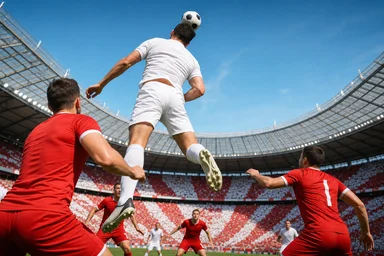
Erling Haaland is the obvious target. In the 2024 club season, he ranked in the 94th percentile among forwards for aerial duels won, per FBref. At 6-foot-4, with exceptional timing and strength, he is a nightmare for defenders. But before Johnsen, Norway rarely used him effectively on corners. Often, Haaland was double-marked, and the delivery was inconsistent.
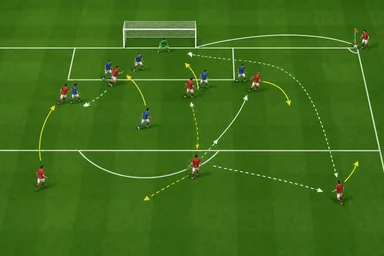
Martin Ødegaard’s delivery accuracy on corner kicks is 78%, according to Opta—among the best in international football. Johnsen has designed routines that maximize this combination. One common pattern: Ødegaard delivers to the near post, where Haaland makes a glancing flick toward the far post, where Sørloth or a midfielder arrives. Another uses a short-corner option, which Norway deploys about 40% of the time against low-block defenses.
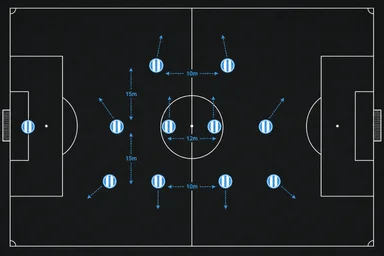
Decoy runs are critical. Sørloth, who is also strong in the air, often drags defenders away from Haaland. In training, Johnsen rehearses three distinct routines per match, each with multiple variations. The players switch between them based on the goalkeeper’s positioning and the defensive shape they see.
This chemistry extends to indirect free kicks. Ødegaard and Haaland have a well-practiced routine where Ødegaard feigns a cross and instead slides a pass to Haaland, who has drifted to the edge of the box. It is a low-risk option that can create shooting angles. In the 2025 qualifier against Scotland, it led to a goal.
Yet there is a risk of predictability. If opponents study Norway’s patterns, they may pre-empt the near-post flick or the short corner. Johnsen counters by introducing a new routine every three matches, often based on recent opponent scouting. For example, against a team that overloads the near post, Norway switches to a far-post delivery with a late run by a midfielder. This constant evolution is essential to stay ahead.
Knockout Stage Pressure: When One Set Piece Decides
The last four World Cups have seen eight knockout matches decided by a set-piece goal, including the 2018 quarterfinal between Sweden and England (both goals from corners) and the 2022 Round of 16 match between Japan and Croatia, where Japan’s equalizer came from a corner. In such moments, preparation becomes decisive.
Norway’s penalty shootout record is modest: they have won only one of four major tournament shootouts. Johnsen has addressed this by identifying three penalty takers early in the campaign—Haaland, Ødegaard, and Berge—and having them practice under simulated pressure. He also studies opponent goalkeeper tendencies, such as dive direction and reaction time.
But penalties are a last resort. The goal is to win in regulation, ideally from a set piece. Johnsen’s contingency plan includes specific routines for the final 10 minutes of a knockout match, when fatigue sets in and defenses tighten. These often involve longer deliveries and more bodies in the box.
Some analysts question whether set-piece success in qualifiers translates to the World Cup, where referees may allow more physical contact. Norway’s players have adapted by training with minimal protective gear, simulating the jostling they expect. “We try to make training harder than the game,” Johnsen told a podcast. “If you can score in practice with someone grabbing your shirt, you can score in a match.”
An additional challenge is the mental pressure of a knockout match. Norway’s players are not accustomed to deep tournament runs; only a few have Champions League experience. Johnsen has introduced visualization exercises, where players imagine the exact sequence of a set-piece goal in a quarterfinal. This psychological preparation is as important as the physical drills.
The Tactical Arms Race: Norway vs. Elite Defenses
Norway is not alone in prioritizing set pieces. France, Brazil, and Argentina all have dedicated video analysts who study opponents’ dead-ball patterns. The tactical arms race means that routines must evolve constantly. Johnsen maintains a custom database of over 200 set-piece clips per opponent, updated after every international break.
One edge Norway has is their use of artificial turf in training, which mimics the surfaces used in some World Cup venues. This helps players adjust to ball speed and bounce. Additionally, Johnsen has designed non-contact set-piece drills to reduce hamstring injury risk, a common problem during high-intensity World Cup matches.
Yet elite defenses are adept at countering set pieces. France, for example, uses a hybrid zonal-man-marking system that is difficult to decode. Brazil often leaves a fast striker high to prevent a counter-attack, which can limit the number of players Norway commits forward. Johnsen’s response is to vary the timing of the delivery, sometimes delaying the kick by four seconds to disrupt defensive organization.
The arms race also involves technology. Norway uses GPS trackers to monitor player positioning during set pieces, ensuring that each run hits its intended zone. Video review sessions after each match identify what worked and what didn’t. The process is iterative, and Johnsen is constantly tweaking.
However, there is a counter-argument that over-engineering set pieces can lead to analysis paralysis. Some players may second-guess their runs if they are overloaded with information. Johnsen mitigates this by limiting the number of routines per game to three, each with clear triggers. He emphasizes instinct within structure, allowing players to react to what they see rather than following a rigid script.
Why Norway’s Ceiling Depends on a 10-Second Sequence
According to Opta, the average set-piece sequence lasts 6.3 seconds from delivery to shot. In that window, Norway’s conversion rate on second-phase set pieces—where the ball is cleared and then recycled—is 18%, compared to Argentina’s 21% during their 2022 title run. Closing that gap could be the difference between a quarterfinal exit and a semifinal appearance.
Johnsen has introduced micro-routines: a four-second delay before delivery, allowing attackers to settle; a specific hand signal from Ødegaard to indicate the target; and a rule that no player stands still for more than two seconds. These details seem trivial, but in a 10-second sequence, they can create a half-yard of space.
Norway’s ceiling is not unlimited. They lack the squad depth of France or Brazil. But set pieces are a great equalizer. If they reach the quarterfinals, as many pundits predict, it will likely be because a set piece decided a tight round-of-16 match. Conversely, if they bow out early, it may be because opponents neutralized their dead-ball threat.
The evidence suggests that Norway’s set-piece investment is paying off. But tournaments are fickle. One poor delivery, one mistimed run, and the chance evaporates. For a team that has not advanced past the group stage since 1998, the margin for error is razor-thin. Johnsen’s task is to make that 10-second sequence as reliable as possible. If he succeeds, Norway could finally break their knockout drought.
Beyond the statistics, there is a human element. Johnsen’s ability to communicate complex ideas in simple terms has been praised by players. He uses video clips of NBA pick-and-rolls to illustrate spacing, and he encourages players to suggest variations. This collaborative approach fosters ownership, making the routines more effective under pressure.
Looking ahead, Norway’s 2026 campaign will be a test of whether a dedicated set-piece coach can truly tip the balance. The team’s fate may hinge on a single corner kick in the 85th minute of a knockout match. If Johnsen’s preparation pays off, that moment could define Norwegian football for a generation.