Three Nation Visas and 14-Hour Bus Routes Define 2026 Fan Travel Reality
The 2026 FIFA World Cup will be the first hosted by three nations simultaneously, a logistical experiment that will redefine the fan experience. For supporters, the dream of following their team from Vancouver to Mexico City comes with a sobering reality: separate visas for each country, 14-hour bus journeys between some host cities, and costs that can exceed $10,000 per person. As of late 2024, consular appointments in key markets like Brazil and Argentina are already backlogged by months, and cross-border flights are being booked nearly a year in advance. This is not the compact, train-friendly Germany of 2006; it is a sprawling, car-dependent continent where a single match day might require an overnight coach ride.
Three Countries, One Ticket: The Visa Puzzle
Entering the United States, Canada, and Mexico demands separate authorizations. Most visitors to the US can use the Electronic System for Travel Authorization (ESTA), but nationals from dozens of countries—including Brazil, India, and South Africa—must apply for a B-1/B-2 visa, a process that can take months. Canada requires an Electronic Travel Authorization (eTA) for visa-exempt travelers, while Mexico's visa policy varies widely: citizens of the US, Canada, Japan, and the EU can enter without a visa, but many South American and African passport holders need a physical visa obtained at a consulate.
For a Brazilian fan planning to attend matches in all three nations, the paperwork multiplies. They need a US visa (currently wait times of 200+ days in São Paulo), a Canadian eTA (typically processed in minutes), and a Mexican visa (which requires an in-person appointment). FIFA has not announced any tournament-specific visa facilitation, leaving supporters to navigate standard immigration channels. Travel agents report that some fans are applying for US visas as early as mid-2025 to secure appointments before the tournament begins in June 2026.
The complexity is compounded by the fact that not all nationalities can use the ESTA. For instance, Polish citizens, whose team may qualify, need a US visa because Poland is not part of the Visa Waiver Program. Similarly, holders of some Caribbean passports require full visas for Canada. These discrepancies create a tiered system of accessibility, where the ease of travel depends heavily on passport strength. As of 2024, the Henley Passport Index ranks Japan first (visa-free access to 193 destinations), while Afghanistan ranks last (28). For fans from lower-ranked nations, the World Cup may be practically out of reach.
Consular officials in Mexico City and Washington have acknowledged the strain. In a 2023 interview, the US Ambassador to Mexico noted that the State Department was exploring ways to expedite visa processing for legitimate travelers during major events, but no concrete measures have been announced. Meanwhile, private visa expediting services charge $200–500 per application, adding to the financial burden. For families or groups, the visa costs alone can reach thousands of dollars before a single ticket is purchased.
The 14-Hour Bus Haul That Breaks the Itinerary
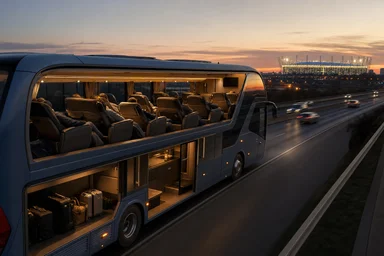
Once visas are secured, fans face the challenge of moving between host cities. The 2026 tournament spans 4,800 kilometers from Vancouver, Canada, to Mexico City, Mexico. While air travel dominates, bus routes remain the most affordable option for many. The longest bus journey between host cities is Monterrey to Mexico City, a 14-hour haul that crosses the Sierra Madre Oriental. Greyhound and ADO, the major operators, have announced extra services for match days, but seating capacity remains limited.
Even shorter routes test endurance. The Vancouver to Seattle leg, roughly 4 hours by coach, is a common transfer for fans attending matches in both Cascadia cities. Yet the border crossing at Blaine can add 1–2 hours of waiting, especially on game days. Amtrak's Cascades train covers the same route in 3.5 hours but runs only twice daily, selling out weeks in advance for the tournament period. As of late 2024, some fans have already booked flights between these cities, paying $300–500 for a 45-minute hop that would normally cost $100.
Cross-border flights are the most time-efficient option but come at a premium. A round-trip between Los Angeles and Mexico City in June 2026 is already listed at $600–$900 on major booking sites, roughly triple the off-season price. For fans following a team that plays in three different host cities, the total flight budget can exceed $2,000. Charter services and group bookings offer some relief, but availability is tight.
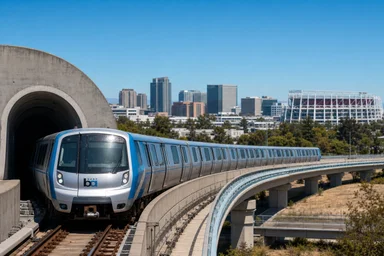
Rail connections are sparse. The US and Canada lack the high-speed networks common in Europe. VIA Rail's Canadian service runs only three times a week between Toronto and Vancouver, a 72-hour journey unsuitable for match-day travel. Mexico's passenger rail system is limited to tourist routes like the Copper Canyon train. As a result, the bus remains the backbone of ground transport, despite its discomfort. The American Bus Association has noted that some fan groups, such as the American Outlaws, are organizing private coach convoys, renting entire vehicles to bypass scheduled services and control their own timetables.
How 2026's Spread Rewrites the Fan Budget
The average fan is projected to visit 2.3 host cities, according to a 2024 FIFA-commissioned study. That means multiple flights or long bus rides, plus accommodation in each city. In tournament hubs like New York and Mexico City, hotel prices spike 300% during the event, with basic rooms costing $400–600 per night. Airbnb listings in Guadalajara and Toronto show similar surges, with some hosts requiring minimum stays of 7–14 days. Internal flights often cost more than transatlantic ones: a round-trip from London to New York in June 2026 can be found for $500, but a one-way from New York to Los Angeles might run $400. Supporter groups estimate the total trip—including tickets, visas, flights, accommodation, food, and ground transport—at $8,000–12,000 per person for a two-week itinerary, roughly double the cost of attending a single-nation World Cup.
FIFA's official hospitality packages, which include match tickets and accommodation, start at $5,000 and go up to $25,000 for premium experiences. These packages simplify logistics but lock fans into specific itineraries. Independent travelers who book separately can save money but face higher risk of delays and cancellations. The trade-off between convenience and cost is stark. Some fans are offsetting expenses by sharing accommodation or using loyalty points. Credit card rewards programs, such as airline miles and hotel points, are being hoarded by savvy travelers. However, blackout dates during major events often block redemptions. A survey by the travel site Expedia found that 40% of fans planning to attend are using credit card points for flights, but only 20% have successfully booked award seats as of early 2025.
Travel Agents See a Surge in Multi-Nation Packages
Travel agencies are adapting to the three-nation format. Expedia reports a 40% rise in searches for combined Canada-Mexico itineraries compared to previous World Cups. Specialist operators like Road Scholar and G Adventures are offering football-themed cross-border tours that bundle visa assistance, match tickets, and guided transport. These packages can cost $10,000–$15,000 but promise a seamless experience.
Insurance companies are also innovating. Multi-trip policies covering a 32-day window—the tournament's duration—are being sold by Allianz and World Nomads, with premiums around $200–400. These policies cover medical emergencies, trip cancellations, and lost luggage across all three countries. However, they exclude pre-existing conditions and often have high deductibles.
Demand for flexible booking options outstrips supply. Airlines like Delta and Air Canada have introduced "World Cup fares" that allow free date changes within a 60-day window, but these cost 20–30% more than standard tickets. Hotels are offering refundable rates at a premium, while Airbnb hosts increasingly enforce strict cancellation policies. For fans, the message is clear: book early or pay more.
One emerging trend is the "hub-and-spoke" strategy, where fans base themselves in a central city—such as Dallas or Houston—and fly to matches in other cities. Dallas, centrally located within the US, offers direct flights to most host cities and has ample hotel capacity. Some tour operators are marketing packages that keep fans in one hotel for the entire group stage, with daily shuttles to nearby stadiums. This approach reduces the number of border crossings but limits the chance to explore multiple countries.
What the 2006 German Model Teaches About Logistics
The 2006 World Cup in Germany is often cited as a logistical benchmark. With 12 stadiums within an 800 km radius, fans could travel between cities by train in under four hours. Deutsche Bahn ran 1.5 million inter-city train journeys during the tournament, and the country's integrated ticketing system allowed seamless transfers. In contrast, 2026's 16 stadiums span 4,800 km, and rail networks are fragmented.
Amtrak and VIA Rail lack the capacity to handle a surge of World Cup travelers. Amtrak's Northeast Corridor, its busiest route, operates at near capacity on most days. VIA Rail's Toronto-Montreal corridor, the busiest in Canada, has only 5 daily departures. Neither network has announced major capacity expansions for 2026. FIFA's own transport study, published in 2023, flagged border delays and insufficient cross-border rail as key risks.
Germany also benefited from a single visa regime: all 12 host cities were in one country, so fans needed only a Schengen visa. For the 2026 tournament, the visa complexity adds a layer of friction that Germany did not face. FIFA has not indicated any plans for a joint visa or fast-track system, leaving fans to navigate three separate immigration systems. Some experts argue that the three-nation format was chosen for political and commercial reasons, not logistical efficiency.
Yet there are lessons to be learned. Germany's success relied on early planning and coordination between transport authorities, stadium operators, and FIFA. For 2026, similar coordination is happening through the World Cup Transport Working Group, which includes officials from all three host nations. But as of early 2025, the group has not published a comprehensive transport plan. Fans are left to assume that the tournament will function, even if it requires more effort than previous editions.
Can Digital Nomads Turn the World Cup Into a Work Trip?
The rise of remote work has opened a new possibility: attending the World Cup while continuing to work. Digital nomads are already booking long-term stays in host cities to avoid repeat travel. Coworking spaces in Guadalajara and Toronto report 60% more pre-bookings for June–July 2026 compared to the same period in 2022. Airbnb data shows that average booking length for World Cup periods has increased from 7 days in 2022 to 11 days in 2026, with some guests staying a full month.
Mexico's temporary resident visa, which allows stays of up to four years, is attractive to digital nomads who want to base themselves in the country. The visa requires proof of income ($2,500/month or savings of $43,000) and can be obtained at a Mexican consulate. In contrast, the US B-1 visa limits business-related stays to six months and does not permit remote work for a foreign employer, though the rule is loosely enforced. Canada's eTA allows stays of up to six months, but visitors cannot work for a Canadian company without a work permit.
For fans who can work remotely, the World Cup becomes a cost-splitting opportunity. Instead of taking unpaid leave, they can stretch their stay across multiple host cities, working from coffee shops and coworking spaces during non-match hours. This approach reduces accommodation costs (since they pay for a month rather than nightly rates) and allows them to attend more matches. However, it requires a stable internet connection, a quiet workspace, and a tolerant employer. Some companies have already announced "World Cup leave" policies, while others expect employees to use vacation days.
The digital nomad trend also impacts local economies. In Guadalajara, a host city with a growing tech scene, coworking memberships have doubled in price for the tournament period, from $100 to $200 per month. Cafes near stadiums are planning to extend hours and offer match-day specials. But the influx of remote workers also strains housing markets, with some landlords converting long-term rentals to short-term vacation stays. For local residents, the World Cup may bring both economic opportunity and displacement.
The Practical Considerations for 2026 Travelers
Many observers note that fans should begin preparations well in advance. Visa applications, for example, are typically submitted months before travel, especially for countries with long processing times. Booking refundable flights across all three nations is advisable, as match schedules may change after the draw in December 2025. Travel insurance covering multi-country medical emergencies, trip cancellation, and lost luggage is essential; policies should be reviewed for exclusions related to pandemics or civil unrest.
Packing for climate diversity is critical. Vancouver in June averages 15°C with rain, while Mexico City in July can reach 25°C with afternoon thunderstorms. Dallas and Houston are hot and humid, often exceeding 35°C. Fans should bring layers, waterproof gear, and sun protection. Offline maps and translation apps are recommended for rural areas where connectivity may be spotty. Spanish is the dominant language in Mexico, while English and French are official in Canada; in the US, Spanish is widely spoken in many host cities.
It is also wise to have a backup plan for border crossings. The US-Canada land border can have wait times of 2–4 hours on game days. Fans with tight itineraries should budget extra time or consider flying. For those driving across the US-Mexico border, vehicle insurance requirements differ, and rental cars often prohibit cross-border travel. Some rental agencies offer Mexico-specific permits for an additional fee.
Ultimately, the 2026 World Cup will test the patience and resourcefulness of fans. The tournament's scale offers a unique opportunity to experience three distinct cultures, but it also demands a level of planning that previous World Cups did not. As one supporter group leader put it, "You're not just following your team; you're navigating a continent." For those who succeed, the journey will be unforgettable—but the path is paved with paperwork, long bus rides, and a budget that rivals a small vacation home. Will fans embrace the challenge, or will the logistical hurdles dampen attendance? The answer may shape how future multi-nation tournaments are designed.