England’s 2026 Squad Depth Exceeds Their 2018 Semi-Final Run
Eight years after Gareth Southgate’s side fell just short of the World Cup final in Russia, England’s squad for the 2026 tournament looks markedly deeper. The 2018 team that reached the semi-finals was built around a tight group of trusted starters, with little margin for injury or form dips. By contrast, the 2026 squad can field two competitive XIs across multiple formations. This piece examines how that depth developed, where it still carries risk, and what it means for England’s tournament prospects.
The 2018 Benchmark Was Impressive but Relied on a Thin Core
England’s 2018 campaign saw only 13 outfield players log over 200 minutes across the seven matches. Harry Kane carried the attacking load with six goals, including three from set pieces. Kieran Trippier, Harry Maguire, and Jordan Pickford were all relatively untested at elite international level before the tournament. Southgate had limited trusted substitutes: Marcus Rashford and Ruben Loftus-Cheek were the only attackers regularly introduced from the bench.
The extra-time defeat to Croatia in the semi-final exposed the depth gap. England led 1-0 early in the second half, but as legs tired, Southgate made only two substitutions before extra time. Croatia brought on four fresh players, and their midfield gained control. By the 109th minute, Mario Mandzukic scored the winner. England’s bench that day included Danny Welbeck, who had played only 27 minutes all tournament, and Gary Cahill, who had played none. The thin core was a clear limitation.
Set pieces were a strength: England scored eight goals from dead-ball situations, more than any other team. But open-play creativity often stalled. Against Colombia in the round of 16, England created only 0.6 xG from open play and needed penalties to advance. The team’s reliance on Kane’s individual brilliance and set-piece routines masked underlying squad limitations. Southgate himself acknowledged after the tournament that England lacked the depth to rotate in group games and keep players fresh for the knockout rounds.
That 2018 squad also had positional imbalances. Left-back was a persistent concern: Ashley Young, then 32, started every match. At centre-forward, Kane had no reliable backup; Jamie Vardy played only 22 minutes. The midfield trio of Jordan Henderson, Dele Alli, and Jesse Lingard was effective but lacked a true ball-winner or a creative passer from deep. England’s xG per shot in open play was 0.11, below the tournament average for semi-finalists. The thin core got them further than expected, but it was not a sustainable model for consistent success.
By 2026 England Can Field Two Competitive XIs
Fast forward to 2026, and the depth chart looks fundamentally different. Jude Bellingham, Phil Foden, Bukayo Saka, and Declan Rice form an elite midfield core that can play together or be split across two lineups. Bellingham’s 2023-24 season at Real Madrid saw him score 23 goals from midfield, a production level England lacked a decade ago. Foden’s 19 goals and 8 assists in the Premier League that same season show his capacity to influence matches from wide or central positions.
Beyond that core, Cole Palmer, Kobbie Mainoo, and Anthony Gordon offer different profiles. Palmer’s composure in tight spaces and set-piece delivery make him a viable starter or impact substitute. Mainoo’s ability to receive under pressure and break lines with dribbles adds a dimension England did not have in 2018. Gordon’s direct running and pressing intensity give Southgate a vertical threat off the bench. In 2018, England had no player with Gordon’s combination of speed and defensive work rate.
Defensive depth has also improved. John Stones remains the leader, but Marc Guehi, Levi Colwill, and Jarrad Branthwaite all started Premier League matches in 2024-25 with composure on the ball. Guehi’s 1.8 interceptions per 90 and 80% pass completion in the defensive third for Crystal Palace show his reliability. Colwill’s left-footed profile allows balance in a back three or four. Branthwaite’s 6-foot-4 frame and recovery speed make him a credible alternative to Maguire, who is now 33 and likely to be phased out.
Full-back options are similarly deep. Trent Alexander-Arnold, now more experienced in midfield roles, can also play right-back. Luke Shaw, Ben Chilwell, and Kieran Trippier offer experience on the left, while Kyle Walker, though 36, still covers ground effectively. Goalkeeping is no longer a worry: Pickford remains consistent, Aaron Ramsdale has Champions League experience, and James Trafford has emerged as a promising third option. England could field two XIs that would both be competitive against top-20 nations, something that was not true in 2018.
Youth Production Lines Are Producing More High-End Talent
The structural changes at St. George’s Park, implemented after the 2012 Olympic cycle, began yielding results by the late 2010s. The national training centre standardised coaching methods across age groups and improved talent identification. The U17 World Cup-winning squad of 2017 produced several current senior contributors: Foden, Saka, Jadon Sancho, and Marc Guehi all featured in that tournament. That generation is now in its early-to-mid twenties, entering peak years.
Premier League minutes for English U21 players rose roughly 40% between the 2018-19 and 2023-24 seasons, according to analysis by the CIES Football Observatory. Clubs like Manchester City, Chelsea, and Arsenal have invested heavily in their academies and now produce England-eligible players at a higher rate. City’s academy alone has produced Foden, Palmer, Sancho (who moved early), and Rico Lewis. Chelsea’s loan system has developed Gallagher, Colwill, and Conor Gallagher, while Arsenal’s Hale End has produced Saka, Emile Smith Rowe, and Bukayo Saka.
Scouting networks have also widened. Players like Kobbie Mainoo (Manchester United academy) and Anthony Gordon (Everton academy, now at Newcastle) come from different regional pathways. Mainoo’s Ghanaian heritage and Gordon’s Merseyside background reflect the broader demographic reach of English football. The Football Association’s England DNA programme, introduced in 2014, set technical and tactical benchmarks that academies now follow, creating a more consistent pipeline of players comfortable in possession.
The result is a talent pool that is deeper and more varied. In 2018, the squad had only one left-footed outfield player (Ashley Young, who is naturally right-footed but played on the left). By 2026, England could field a left-footed centre-back (Colwill), left-back (Shaw or Chilwell), and left winger (Gordon or Rashford). This variety gives a manager more tactical options and reduces the risk of a single injury derailing the entire plan.
Tactical Flexibility Now Extends Beyond One System
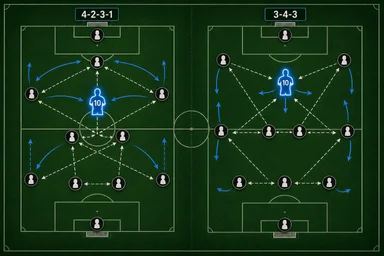
In 2018, England played a rigid 3-5-2 formation that worked well against weaker opponents but struggled when teams sat deep or pressed high. Southgate had limited plan B options. By 2026, England can switch between a 4-3-3, 4-2-3-1, and 3-4-3 without major personnel changes. Bellingham can play as a No. 10, a box-to-box midfielder, or even a false nine. Rice can anchor a midfield two or three. Foden can operate on either wing or centrally.
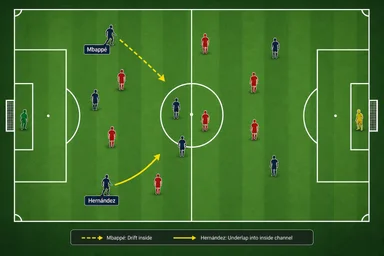
Inverted full-backs have become a regular feature. Alexander-Arnold’s ability to step into midfield from right-back was used by Southgate in 2022, and that tactic is now more refined. In a 4-3-3, Alexander-Arnold can tuck in alongside Rice, creating a 3-2-5 shape in possession. Shaw and Chilwell have also shown they can invert on the left. This tactical flexibility means England can adapt to different opponents without changing the starting XI entirely.
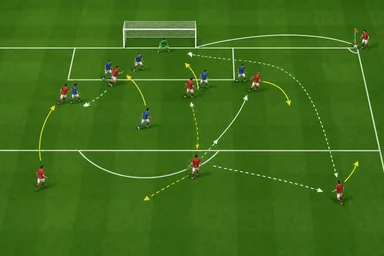
Set-piece threat remains a weapon, but the routines are more varied. In 2018, England relied heavily on Trippier’s deliveries to Maguire. By 2026, Palmer, Alexander-Arnold, and Foden all take set pieces with different trajectories. The variety makes it harder for opponents to prepare. Transition speed has also improved: Saka, Gordon, and Rashford all clocked over 35 km/h in sprint phases during the 2024-25 season, giving England a counter-attacking dimension that was absent in 2018.
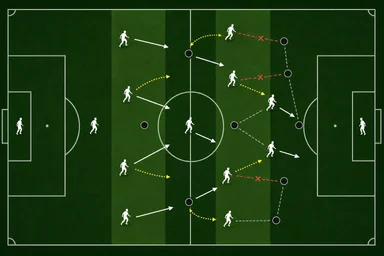
The tactical evolution is not only about formation. England’s pressing triggers have become more sophisticated. Under Southgate, the team often sat in a medium block. By 2026, players like Gordon and Mainoo are comfortable pressing high, forcing turnovers in advanced areas. Against a team like France or Brazil, England can now choose to press or sit deep, depending on the match state. That flexibility was not available in 2018, when the squad lacked the athleticism and tactical discipline to sustain a high press for 90 minutes.
Key Positions That Were Weaknesses Are Now Strengths
Left-back was a glaring weakness in 2018. Ashley Young, a right-footer playing out of position, was functional but offered little attacking thrust. Shaw’s development since then, combined with Chilwell’s recovery from injury and Lewis Hall’s emergence at Newcastle, means England now has three left-backs who can start at a World Cup. Shaw’s 2021 Euro final performance, where he scored after two minutes, showed his capacity to influence big matches.
Centre-forward depth has improved. Kane remains elite, but Ollie Watkins and Dominic Solanke have established themselves as reliable alternatives. Watkins scored 19 Premier League goals in 2023-24 and 16 in 2024-25, with his movement off the shoulder and finishing ability. Solanke’s hold-up play and link-up at Bournemouth have improved steadily. In 2018, Kane had no credible backup; now England can rest him in group games without a sharp drop in quality.
Creative midfield was a problem after Dele Alli’s decline. By 2026, Foden and Palmer provide creativity from central or wide areas. Foden’s 0.55 expected assists per 90 in the Premier League in 2024-25 ranked among the top five midfielders in Europe. Palmer’s 0.48 expected assists per 90 and his penalty-taking reliability add another dimension. Bellingham’s dribbling and line-breaking passes give England a ball-carrier that Alli never was at his peak.
Box-to-box midfield is now a strength. Rice and Bellingham form a world-class pairing. Rice’s 3.2 tackles and interceptions per 90 in the Champions League for Arsenal in 2024-25, combined with his progressive passing, make him one of the best defensive midfielders in the world. Bellingham’s 0.7 goals per 90 from midfield is elite. In 2018, England’s midfield lacked a player who could both win the ball and drive forward; now they have two.
Wide areas are stacked. Rashford, Grealish, Bowen, and Madueke all offer different profiles. Rashford’s pace and finishing, Grealish’s ball retention and foul-drawing, Bowen’s two-footed crossing, and Madueke’s dribbling give a manager multiple options. In 2018, England had only Sterling and Rashford as natural wide attackers; now they have six or seven. That depth allows rotation during group stages and tactical changes in knockout matches.
Risk Factors That Could Still Undermine This Depth Advantage
Despite the improved depth, a single injury to Harry Kane remains a significant risk. Kane’s ability to drop deep, link play, and finish with either foot is unique. Watkins and Solanke are good, but neither has Kane’s passing range or experience in high-pressure tournament matches. In the 2022 World Cup, England’s attack visibly struggled when Kane dropped deeper to collect the ball, leaving no one in the box. If Kane were to miss the 2026 tournament, England would need to adjust their system.
The managerial transition after Southgate is untested. Southgate’s successor, whoever that may be, will inherit a deep squad but must integrate new players and maintain the team culture. The FA’s next appointment could either maximise the depth or fail to harness it. In 2018, Southgate’s clear identity and trust in a small group were assets; a new manager might not replicate that cohesion.
Integration of dual-nationality players could cause chemistry issues. Players like Mainoo (Ghanaian heritage), Gordon (Jamaican heritage), and others may have strong ties to other nations. While most have committed to England, the process of integration takes time. The 2026 squad could include players who only decided on England late in their development, and that may affect group dynamics or tactical understanding.
Qualifying group pressure is different from tournament knockout strain. England’s depth will be tested in group games against teams that sit deep and counter. In 2022, England struggled to break down the USA in a 0-0 draw, creating only 0.8 xG. If England’s rotated XI fails to create chances in a group match, the pressure on the starters increases. Depth is only valuable if the second-choice players can deliver in high-stakes moments.
Competition from France, Brazil, and Argentina remains fierce. France’s depth at forward and centre-back is probably still superior. Brazil’s attacking options, including Vinicius Junior and Rodrygo, are elite. Argentina’s tactical cohesion under Lionel Scaloni has been proven. Scaloni’s mid-block compact drives Argentina’s 2026 transition, and their defensive structure is hard to break down. England’s depth does not guarantee success against these teams; it only increases the margin for error.
Practical Takeaways for Squad Selection and Tournament Tactics
England should carry three goalkeepers with tournament experience. Pickford, Ramsdale, and Trafford have all played in competitive internationals. Trafford’s penalty-saving record (saved 4 of 14 penalties faced in the 2023-24 season) could be useful in a shootout. Having three trusted goalkeepers allows the manager to rest Pickford in group games without worry.
Prioritising versatile players who cover multiple roles is essential. Alexander-Arnold can play right-back or midfield. Foden can play both wings and centrally. Bellingham can play as a No. 8 or No. 10. Colwill can play left-back or centre-back. This versatility means the 23-man squad can cover more positions than the 2018 squad, which had several specialists who could only play one role.
Using early group games to rotate and manage fatigue is a luxury England now has. In 2018, Southgate made only three changes across the first two matches. By 2026, England could rotate four or five players per game and still field a strong XI. That would keep key players fresh for the knockout rounds, where England have historically faded in extra time. In 2018, England played 120 minutes twice; in 2022, they played 120 once. Better rotation could reduce that load.
Keeping a core of 8-10 players for knockout stability is still important. While depth allows rotation, a consistent spine of Pickford, Stones, Rice, Bellingham, and Kane should start every knockout match. The remaining positions can be chosen based on opponent and form. The bench should offer game-changing pace or set-piece threat: players like Gordon, Rashford, or Palmer can alter a match in the final 20 minutes.
England’s 2026 squad depth is historically high, but depth alone does not win tournaments. Tactical execution, luck with injuries, and mental resilience in high-pressure moments will decide whether England can go one step further than 2018. The foundation is stronger, but the final result remains uncertain. Will the manager harness this depth effectively, or will selection dilemmas and tactical rigidity undermine the advantage? The answers will shape England’s trajectory in the years ahead.